
Fix Your Table Game Mistakes with the Power of Journaling
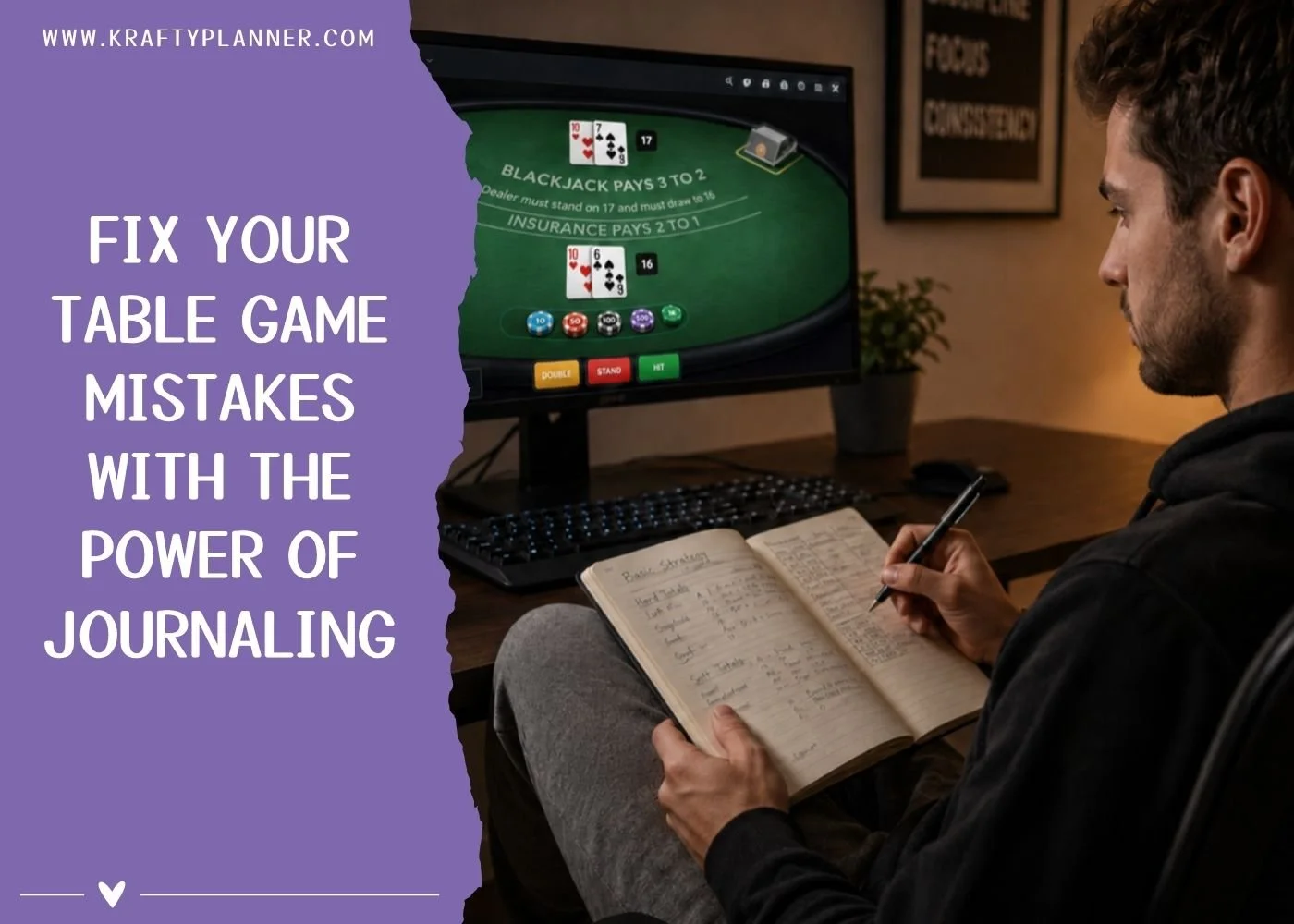
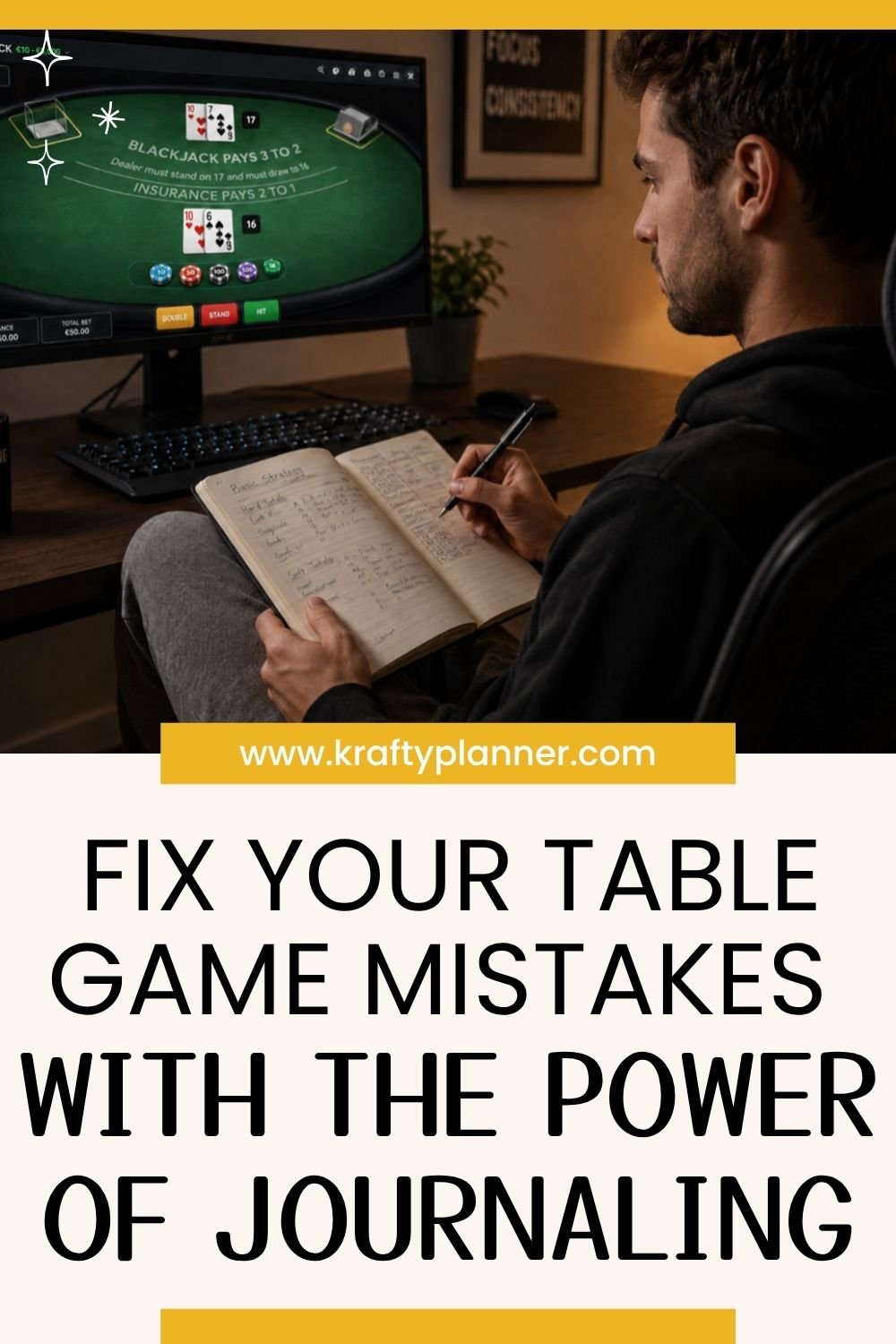
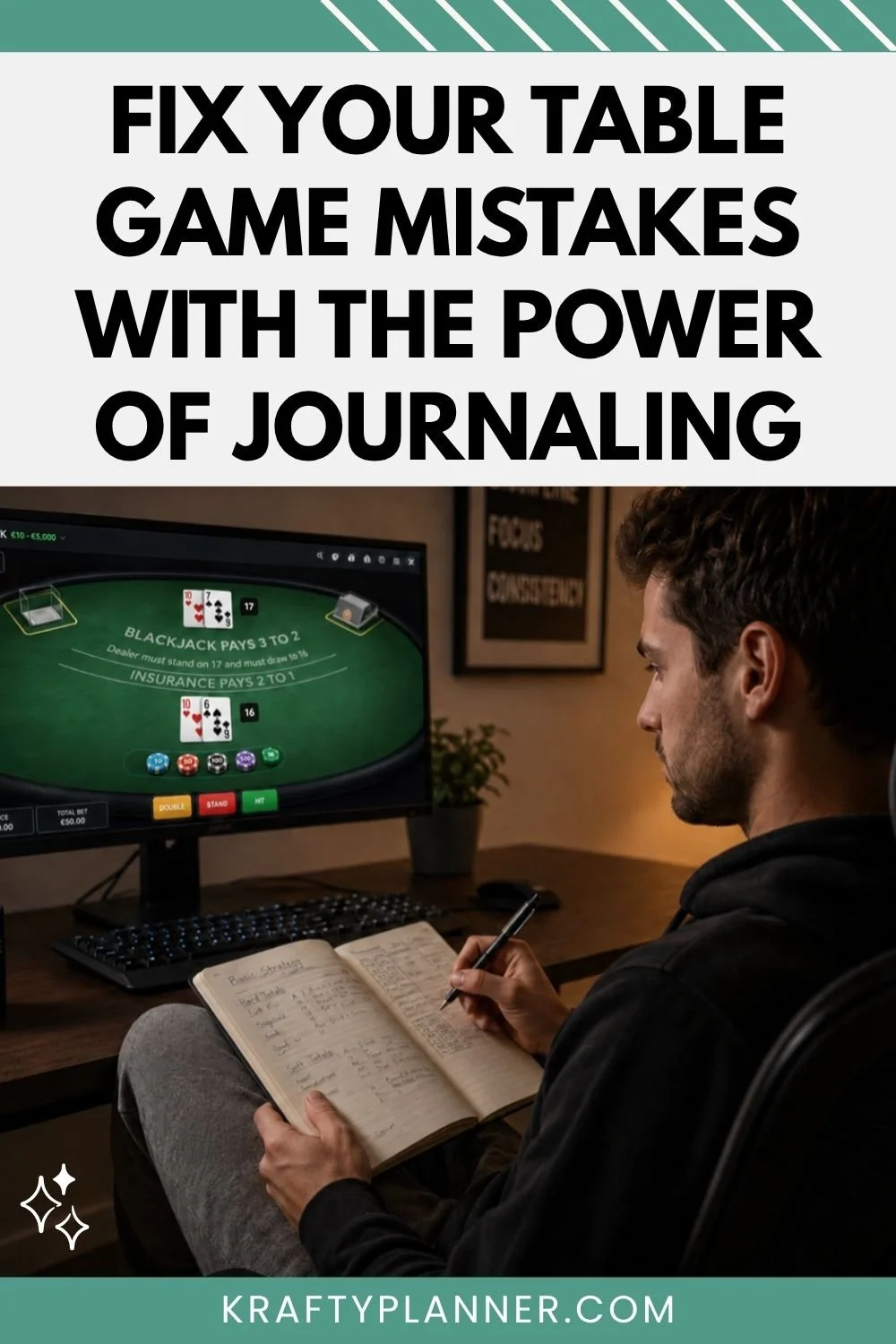
The image was created by us with AI, specifically for this article.
A good result can make a weak decision feel smarter than it was. A quiet session can still contain several strong reads and disciplined calls worth keeping. That is why a decision journal can be a smart thing for table-game players who want improvement they can actually measure, use concept mapping and so on.
A journal gives shape to moments that would otherwise blur together. It turns a fast session into something you can slow down later. Instead of relying on vague memory, you can review the hand, the information on the table, your confidence, and the action you chose. That creates a much better question than “Did I win?” The better question is “Was this a sound decision with the information I had?”
Build your notes around decision patterns
Among table games, blackjack gives journaling a special advantage because every hand can be checked against a stable reference. That makes it one of the clearest places to build a review habit. Your notes are no longer based on a loose feeling about whether a choice seemed right. They can be matched against a known framework, and that gives each entry a clear purpose.
When players ask how to memorise blackjack basic strategy, the most useful answer is to stop treating the chart like one long page. Memory works better when the information is grouped into families. Hard totals belong together. Soft hands belong together. Pairs form their own category. Once you organize decisions this way, you are no longer trying to hold isolated facts in your head. You are learning patterns that return again and again.
Your journal should mirror that structure. For each entry, record the hand type, the dealer upcard, the action you chose, how confident you felt, and the correct action when you review later. One short line can do the job. After a few sessions, the page starts showing you where your recall slips. Some players repeatedly hesitate on soft totals. Others misread pair splits or close doubling spots. Those recurring situations are where the journal becomes valuable.
Knowledge gaps and speed gaps are not the same problem
A strong journal also separates knowledge gaps from speed gaps. Sometimes you truly did not know the correct action. Sometimes you knew it, but you could not retrieve it fast enough under table pace. Those are different problems. A knowledge gap calls for chart study. A speed gap calls for short drills from your own notes, with the answer covered until you commit to a play. That is how a journal turns strategy into faster recall and calmer decision-making.
Review in short cycles so the notes actually teach you
For table-game review, your notes should make you remember the right decision before you check the answer. They should also return on a schedule, instead of waiting for one long catch-up session.
That evidence supports a simple review rhythm like this:
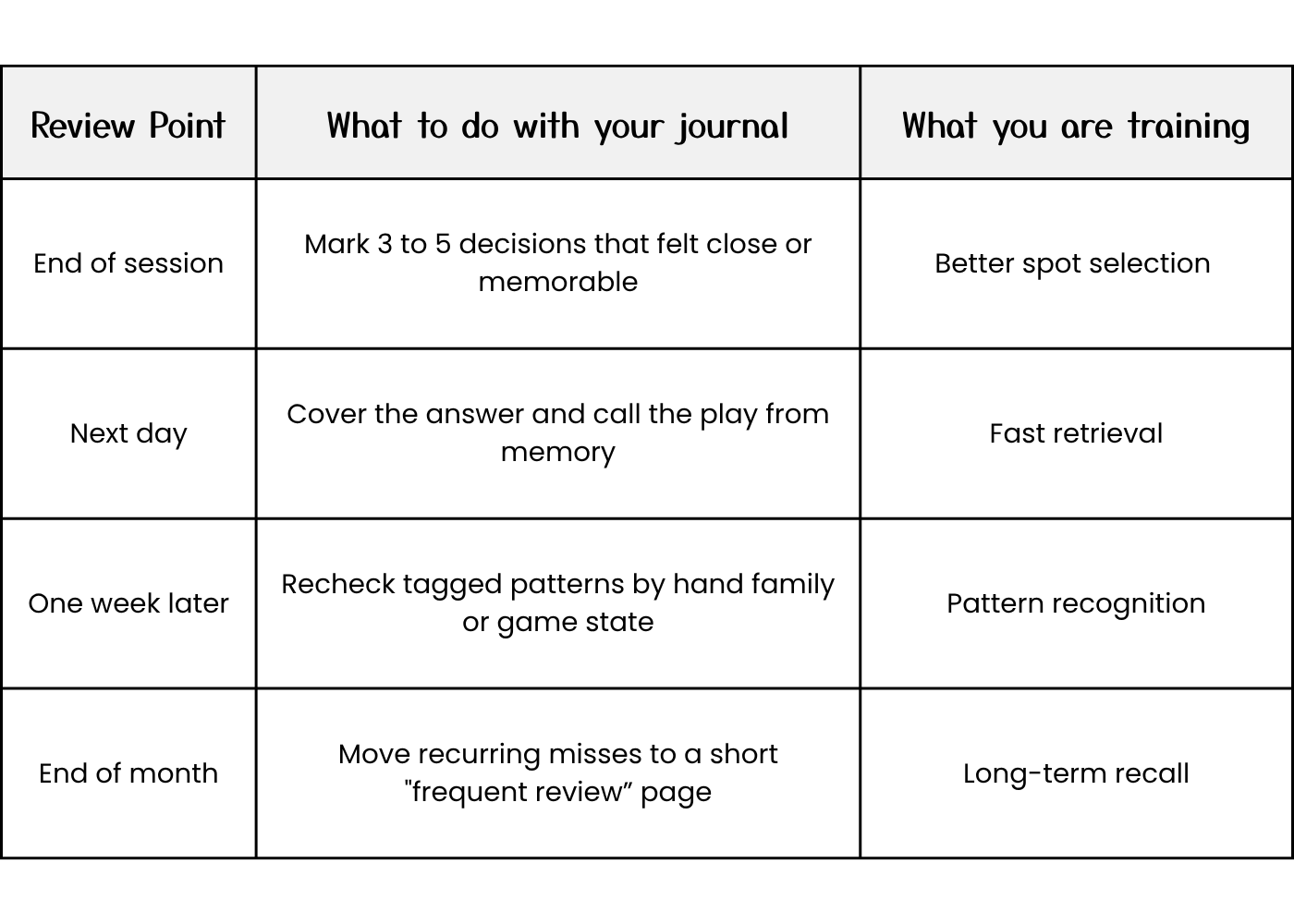
This rhythm keeps the journal usable, and you will notice this after you start journaling. Most entries do not need a full story. A compact note is often better because it is easier to revisit. Over time, repeated spots matter more than dramatic ones. They show you which cues your memory still misses, and that is exactly where later study should go.
Make each entry useful enough to revisit later
A decision journal becomes much more useful when it includes a short reflection period. As Francesca Gino explained, taking time to reflect can help people perform better.
That idea is so typical to table games. A useful entry should capture the situation, the options you considered, the action you chose, and your confidence in the moment. After review, add the preferred play and one short lesson in plain language. Keep the result at the end of the entry so it does not take over the whole note. The goal is to preserve the thinking you had when the choice was live.
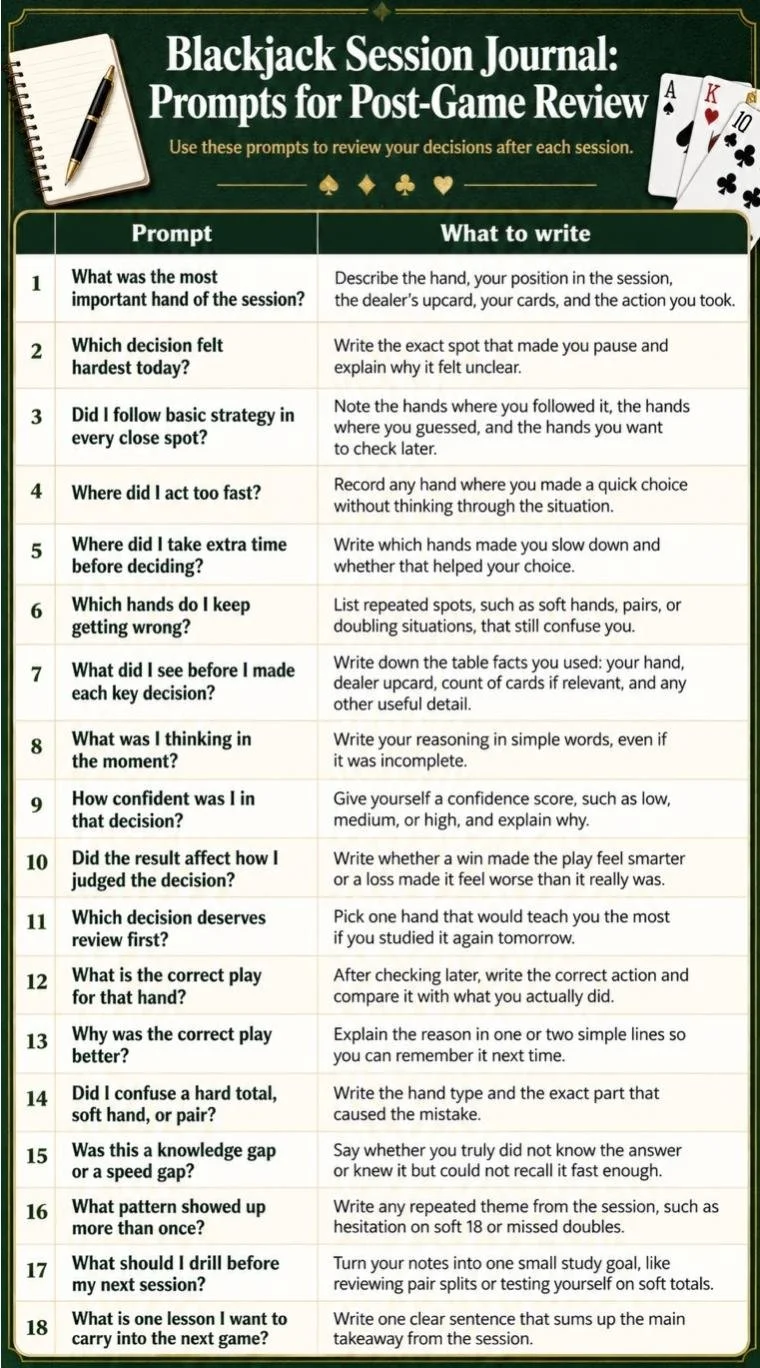
Original visual material, specifically created for this article.
Confidence is especially helpful to track. A correct decision made with low confidence still deserves attention because it may fail under speed next time. A wrong decision made with high confidence deserves attention for a different reason. It often points to a pattern you think you know but actually need to rebuild. Over several sessions, that confidence record becomes a quiet guide to where your review time should go.
A strong journal stays simple and specific
The strongest journals are simple enough to maintain and specific enough to teach. When each entry ends with one clear lesson, later review gets easier. You are no longer staring at a pile of session memories. You are studying your own decision habits in a format that keeps improving with use.
A decision journal becomes a helpful thing because it turns passing table moments into study material you can actually reuse. The clearer your notes are about the cue, the choice, and the lesson, the more value every later review will have.
FAQ
Why should I journal blackjack decisions instead of only tracking wins and losses?
Because wins and losses do not always show if your choice was good. A journal helps you review the hand, your thinking, and whether your decision matched a good strategy.
How much should I write after a session?
Keep it short. A few lines for each important hand is enough. Include your cards, the dealer’s upcard, your action, and why you chose it.
What kinds of hands should I review first?
Start with the hands that felt close, confusing, or repeated during the session. These spots usually teach you the most.
How often should I go back and review my notes?
Review them quickly the next day, then again later in the week. A short, regular review is usually better than one long catch-up session.
Responsible Gaming Disclaimer: Gambling should be viewed as entertainment, not a way to make money. Never wager more than you can afford to lose. If you or someone you know may have a gambling problem, call or text the National Problem Gambling Helpline at 1-800-GAMBLER (1-800-426-2537) or visit their website for confidential support and resources.
FOR PERSONAL USE ONLY – Please Read Freebies Terms of Use
(This post may contain affiliate links. For more information, see my disclosures here.)
~ SHARE THIS POST ~
Did you like this post? Do you know someone else who might enjoy it? Please take a minute to share it on Pinterest, Facebook, or your favorite social media… Thank you!











Planning your year as a caregiver? Learn how to organize caregiving expenses, appointments, routines, and respite while protecting your budget and energy.