
How to Turn Printable Planner Pages Into a Custom Photo Book for Your Best Memories

Printable planner pages are usually designed for schedules, goals, and daily organization. But if you have old pages filled with notes, doodles, receipts, photos, and little reminders of important moments, they can become something much more meaningful.
With a little planning, those pages can be turned into a custom keepsake that feels personal, polished, and worth revisiting.
A planner photo book is a smart way to preserve a year, a special trip, a pregnancy journey, a wedding countdown, or even a season of everyday life. Instead of leaving those pages scattered in folders or drawers, you can group them into a beautifully printed memory book that tells a story.
The result is part scrapbook, part journal, and part photo album - without needing to start from scratch.
Why printable planner pages make great memory books
Planner pages already do something powerful: they capture life in real time.
Unlike a clean photo album, they often include the small details that would otherwise be forgotten. A messy calendar square, a handwritten reminder, or a meal plan from a vacation week can bring back the feeling of that moment instantly.
That is what makes printable planner pages so useful for memory keeping. They show not just what happened, but how life looked while it was happening. When paired with photos, they become a richer record of your experience.
This approach works especially well if you like documenting things in a practical way. You do not need fancy crafting skills or a big design background. You just need a thoughtful selection of pages and a clear idea of the story you want to keep.
Start by choosing a theme for your photo book
Before you gather files or print anything, decide what kind of story the book should tell. This step matters because it helps you choose the right pages and photos instead of trying to include everything. A focused theme always makes the finished book feel stronger.
You might build the book around one of these ideas:
A full year of family life
A pregnancy or baby’s first year
A wedding planning journey
A travel memory book
A personal goals or wellness tracker
A school or college milestone
Once you have a theme, it becomes easier to be selective. Not every page needs to make the final cut. The best memory books usually feel curated, not crowded.
Choose printable planner pages worth saving
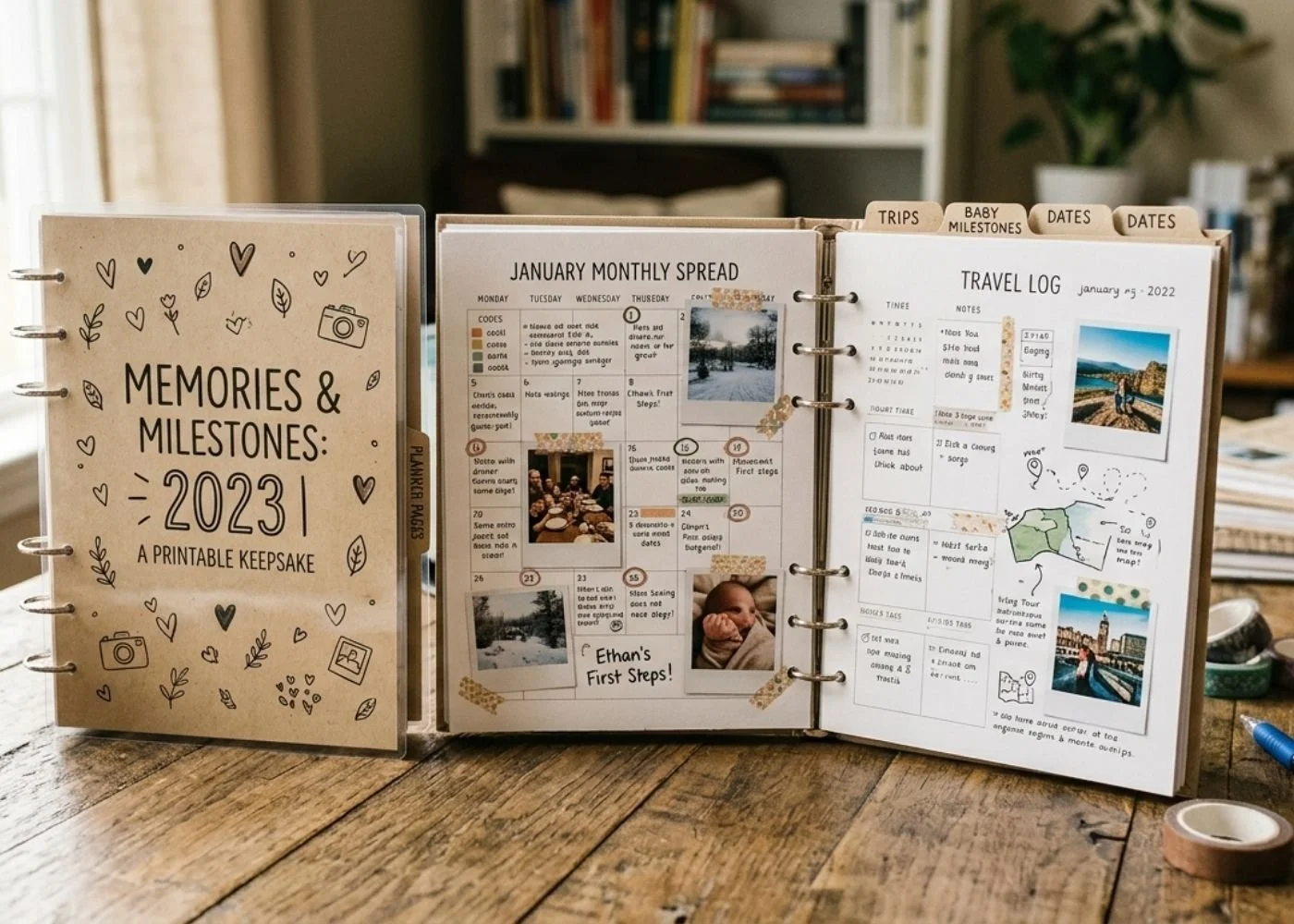
Not every planner page needs to go into the photo book. Look for pages that show progress, emotion, or meaningful moments. Pages with handwritten notes, highlight marks, photos, or even realistic planning chaos often tell the best story.
If your printable planner pages were digital first, export the files in the highest quality possible. If they were printed and used by hand, scan them carefully so the text remains readable. Good image quality is important if you want the pages to look sharp in a finished photo book.
You can also mix in supporting items like:
Ticket stubs
Postcards
Handwritten notes
Maps
Lists
Small drawings
Event invitations
These extras help create a more layered and personal layout. They turn the book into a real memory archive rather than just a collection of calendar pages.
Organize the pages into a story
A good photo book is not just a stack of pages bound together. It needs a flow. Think about how you would tell the story to a friend - what came first, what changed next, and what moments mattered most.
Start by sorting your planner pages chronologically if the book covers a period of time. If the book is based on a theme, organize by category instead. For example, a travel book might move from planning to departure to highlights to reflections. A baby book might follow months, milestones, and special events.
As you arrange the pages, include enough variety to keep things interesting. Alternate between heavily written pages and cleaner designs. Mix planner layouts with photos so the book feels balanced and easy to read.
Design each spread with photos and planner details
This is where the project starts to feel real. Each spread should combine the practical detail of the planner page with the visual emotion of the photos. You do not need to fill every inch. In fact, leaving some white space can make the pages look more polished.
Try matching your photos to the page content. If a planner page records a birthday weekend, place one or two favorite photos beside it. If a page includes a meaningful quote, use a larger image or a small collage that complements the tone.
Keep the design simple and consistent. Use the same fonts, colors, or spacing style throughout the book if you are adding digital text. That consistency helps the whole project feel intentional.
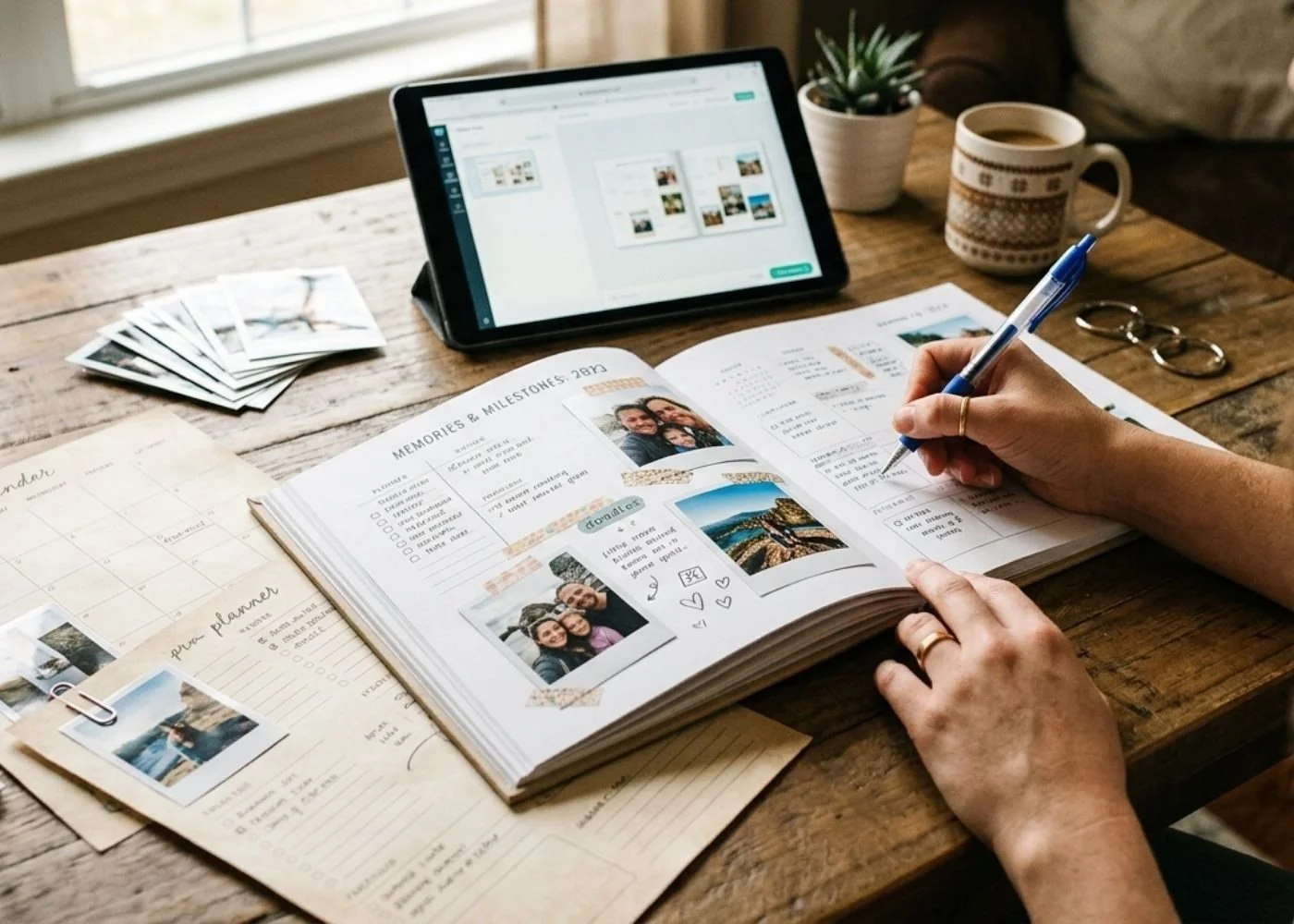
If you want a finished result that looks professionally made, turning your materials into a custom photo book is often the easiest path. It gives your pages a clean, bound format that feels giftable and timeless.
Make the text readable and the memories clear
When planner pages are part of a photo book, the text matters just as much as the images. If handwriting is too small or faint, enlarge the page or recreate key notes in a cleaner format. The goal is to preserve the meaning without making the book hard to read.
It can help to add short captions or date labels alongside the pages. These small notes give context and make the memory easier to understand later. A single line like “Our first weekend at the lake” can do a lot of work.
You do not need to explain everything. The best captions usually add clarity, not clutter. Let the planner page and photographs do most of the storytelling.
Print and bind the book with quality in mind
Once the layout is ready, choose a printing option that matches the feel you want. A sturdy, professionally printed photo book usually works better than loose pages or a basic bound notebook, especially if you want the book to last. Good paper and binding matter because planner pages often include details that deserve to be preserved properly.
Before you order, proofread everything carefully. Check dates, names, and captions. Make sure every page is aligned correctly and that nothing important is cut off at the edges.
If you are using both printed planner pages and digital photos, pay attention to color balance.
Some page backgrounds may appear darker or lighter once printed. A quick preview can help avoid surprises.
Turn the photo book into something you will actually revisit
A memory book should not live on a shelf as decoration only. The real value comes from opening it again and again. That is why it helps to make the book easy to enjoy, not overly precious or complicated.
Keep it somewhere accessible. Use it as a year-end reflection, a gift for someone close, or part of a family tradition. Some people even create one book every year so they can watch their lives change over time.
You may find that the planner pages make the book more emotional than a standard photo album. They capture the small, ordinary moments that often mean the most later. That is what gives the book its heart.
Conclusion
Turning printable planner pages into a custom photo book is a simple way to preserve the parts of life that are easy to forget. With the right theme, a little organization, and thoughtful design, those everyday pages become a meaningful record of your best memories.
If you have planner pages tucked away on your phone or in a drawer, this is the perfect time to give them a second life. Start with one project, choose the moments that matter most, and create something you will be glad to open years from now.
Before you go:
You might also be interested in…
FOR PERSONAL USE ONLY – Please Read Freebies Terms of Use
(This post may contain affiliate links. For more information, see my disclosures here.)
~ SHARE THIS POST ~
Did you like this post? Do you know someone else who might enjoy it? Please take a minute to share it on Pinterest, Facebook, or your favorite social media… Thank you!










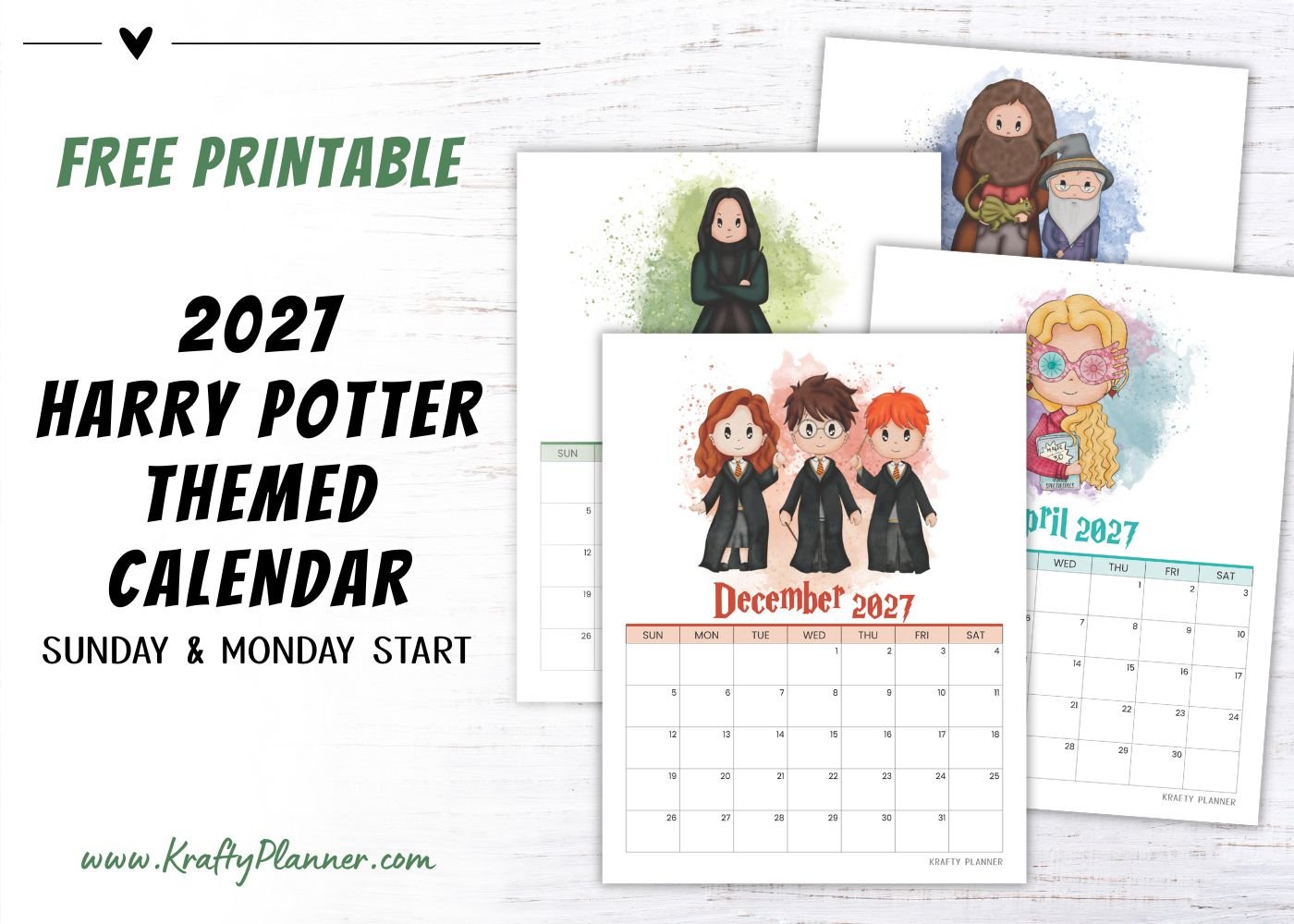



Download a free printable 2027 Harry Potter-themed calendar with fun character illustrations. Choose Sunday or Monday start & add some personality to your planning