
Protect Your Business From Data Breaches: A Guide to AI Privacy Risks

Most small business owners only think about data privacy after something goes wrong. A vendor mishandles customer information, an employee pastes sensitive details into a chatbot, or a new AI tool quietly stores more than anyone realized.
By then, the damage was already spreading. The smarter path is building habits that catch problems before they start, rather than scrambling to explain a mess to customers and staff.
AI tools have become part of daily operations for scheduling, marketing, customer service, and even bookkeeping. That convenience comes with a tradeoff: every tool you adopt is another place where business and customer data might live, get processed, or get shared without your full awareness.
Small businesses often assume they are too small to be a target, but limited resources and thinner oversight can actually make them more appealing to bad actors and more vulnerable to careless vendor practices.
Understanding where these risks actually live is the first step toward preventing them. Data can leak through free AI writing tools, customer service bots, image generators, or even spreadsheet plugins that quietly send information to third-party servers.
Many business owners never read the terms of service closely enough to know what happens to the data they input, and that gap in awareness is where most avoidable incidents begin.
Local context matters too. Business owners researching data privacy risks for small businesses in Medina will find that regional patterns, from the types of vendors commonly used to local regulatory attention, can shape which precautions matter most. A prevention mindset means treating these local details as part of your planning, not an afterthought once a problem surfaces.

revention Habit #1:
Audit and Classify Your Data Before Using AI Tools
Before adopting any new AI tool, take stock of what data it will touch. Separate information into rough categories such as public, internal, and sensitive, then decide which categories are ever appropriate to feed into an outside system.
This single habit prevents the most common mistake businesses make, which is uploading customer records or financial details into a tool without knowing where that data ends up.
A short classification exercise, even done informally on a spreadsheet, gives you a reference point for every future decision.
Prevention Habit #2:
Establish a Vendor Vetting Checklist
Not every AI vendor deserves the same trust. Build a simple checklist covering data retention policies, encryption practices, subprocessor disclosures, and whether the company has had past incidents.
Ask vendors directly how long they keep inputs and whether that data trains their models.
A five-minute review before signing up can prevent months of cleanup later, and it signals to vendors that your business takes these questions seriously rather than skimming the fine print.
Prevention Habit #3:
Create an AI Usage Policy and Training Program
Employees are often the weakest link simply because no one told them otherwise. A short written policy, even one page, clarifies what tools are approved, what data can never be entered into them, and who to contact with questions.
Pair that policy with a brief training session, repeated whenever new tools are introduced, so the guidance stays current rather than becoming a forgotten document. Consistent reinforcement matters more than a lengthy initial rollout.

Prevention Habit #4:
Implement Access Controls and Permission Tiers
Not every employee needs access to every system or every piece of data. Setting permission tiers limits how far a mistake or compromised account can spread.
Someone in marketing may need access to a content generation tool but has no reason to touch customer payment records, and structuring accounts accordingly keeps exposure contained.
This kind of tiered access also makes it easier to spot unusual activity, since fewer people touching sensitive systems means fewer places to check when something looks off.
Prevention Habit #5:
Schedule Regular Security Reviews (Monthly/Quarterly)
Prevention is not a one-time project. Set a recurring calendar reminder, monthly for fast-growing teams or quarterly for smaller operations, to review which tools are active, who has access, and whether any vendor policies have changed.
Businesses that skip this step often discover months later that an employee kept using a tool that was supposed to be retired, or that a vendor updated its data practices without much notice.
A steady rhythm of review keeps small issues from compounding into larger ones.
Data Table: AI Privacy Risk Statistics for Small Businesses
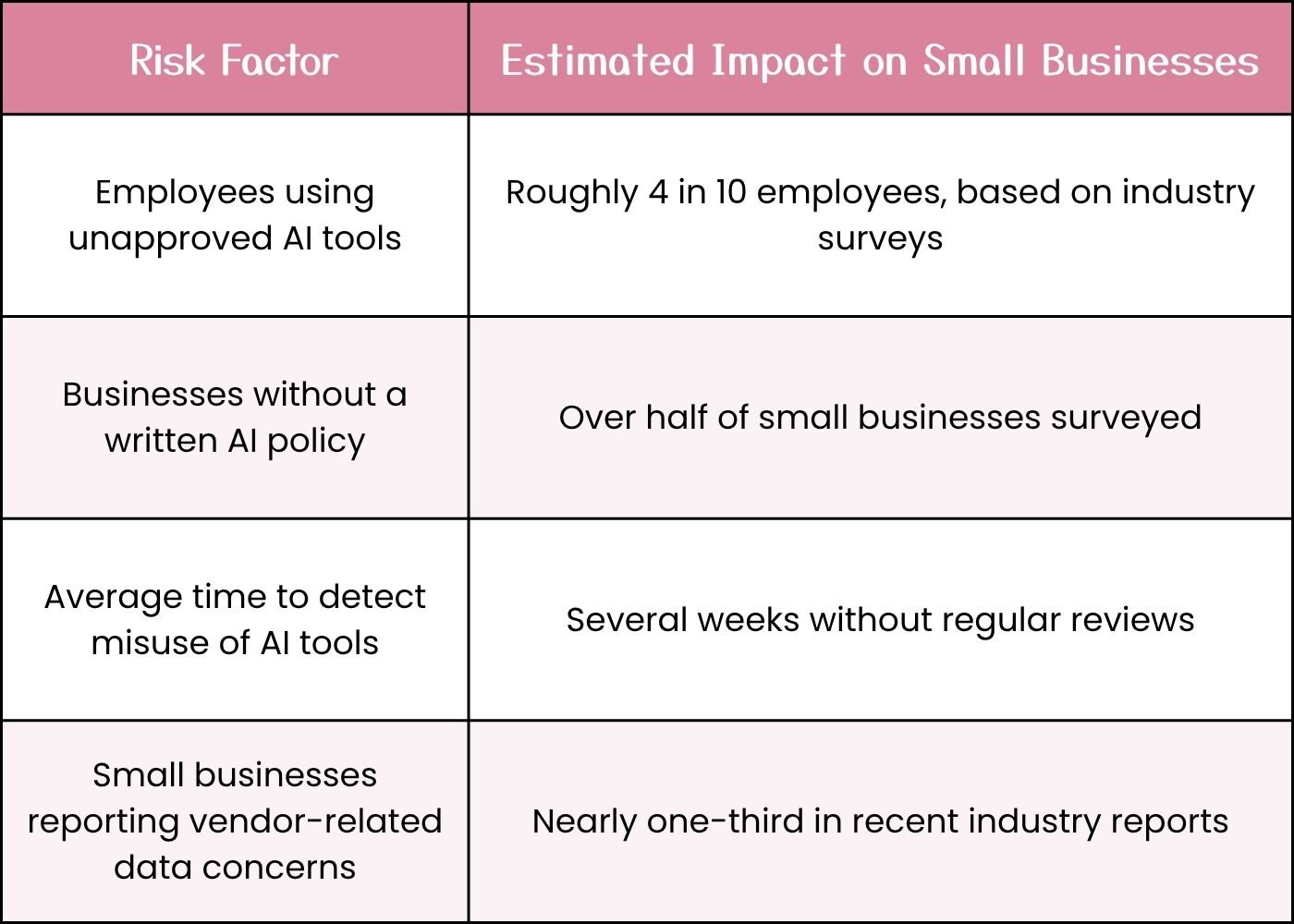
Workforce trends also shape how these risks evolve. According to the Bureau of Labor Statistics, shifts in employment patterns across small business sectors influence how quickly new technology gets adopted, which in turn affects how fast privacy practices need to catch up.
Staying aware of these broader labor trends helps business owners anticipate where gaps might appear as teams grow or change.
Building a Prevention Routine: Weekly and Monthly Checklists
A short weekly checklist might include confirming that new hires received AI usage training and that no unapproved tools have appeared on company devices.
Monthly checklists can cover vendor policy changes, permission audits, and a quick review of any flagged activity.
Keeping these lists short and specific makes them far more likely to actually get used, rather than becoming another item that gets skipped when the week gets busy.
Common Prevention Mistakes Small Businesses Make
Many owners assume a single training session is enough, or that a policy document alone will change behavior without follow-up. Others delay vendor vetting because a tool seems free or convenient, only to discover later that convenience came with hidden data practices.
Skipping regular reviews is another frequent misstep, since habits tend to drift without a scheduled check-in. Recognizing these patterns early makes it easier to build routines that actually hold up over time.
Conclusion: Start Your Prevention-First Culture Today
Waiting for a problem to force change is the slowest and most expensive way to learn these lessons. A prevention-first culture, built through small consistent habits rather than one dramatic overhaul, protects both your customers and your reputation.
For more planning tools and organizational resources that support steady, proactive habits, visit the resources section and start building routines that keep your business a step ahead.
Before you go:
You might also be interested in…
(This post may contain affiliate links. For more information, see my disclosures here.)
~ SHARE THIS POST ~

Did you like this post? Do you know someone else who might enjoy it? Please take a minute to share it on Pinterest, Facebook, or your favorite social media… Thank you!




















Planning your year as a caregiver? Learn how to organize caregiving expenses, appointments, routines, and respite while protecting your budget and energy.