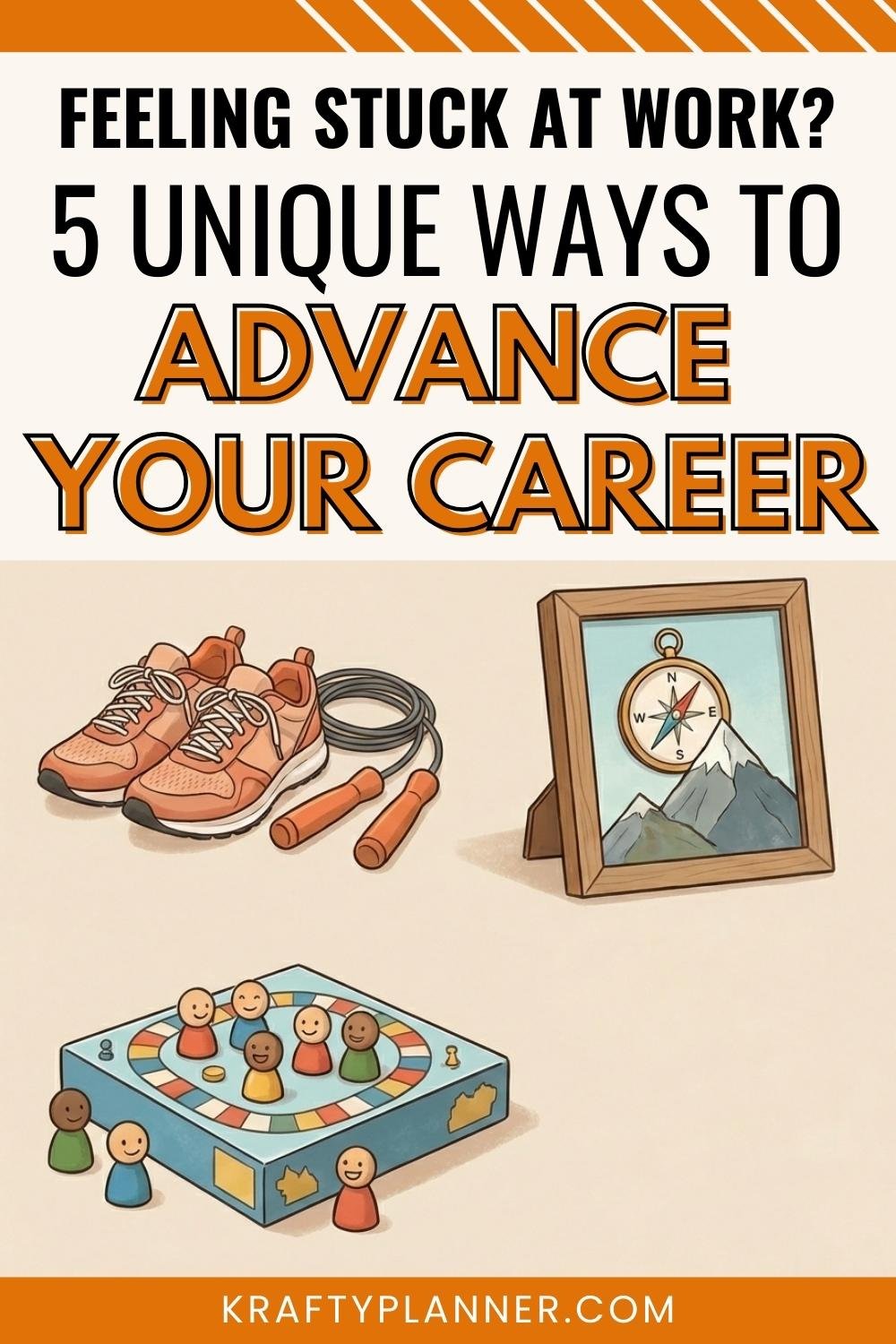
Feeling Stuck at Work? 5 Unique Ways to Advance Your Career

Feeling stuck in your career?
You might be overlooking powerful ways to unlock your full potential and improve your life satisfaction.
Standard advice tells you to negotiate pay raises or switch jobs, but this doesn't always solve the problem. Instead, it might be putting a Band-Aid on the real issue: lack of focus, support, or tangible goals.
Today, we'll explore the many ways you can boost your career potential without sending out a single resume.
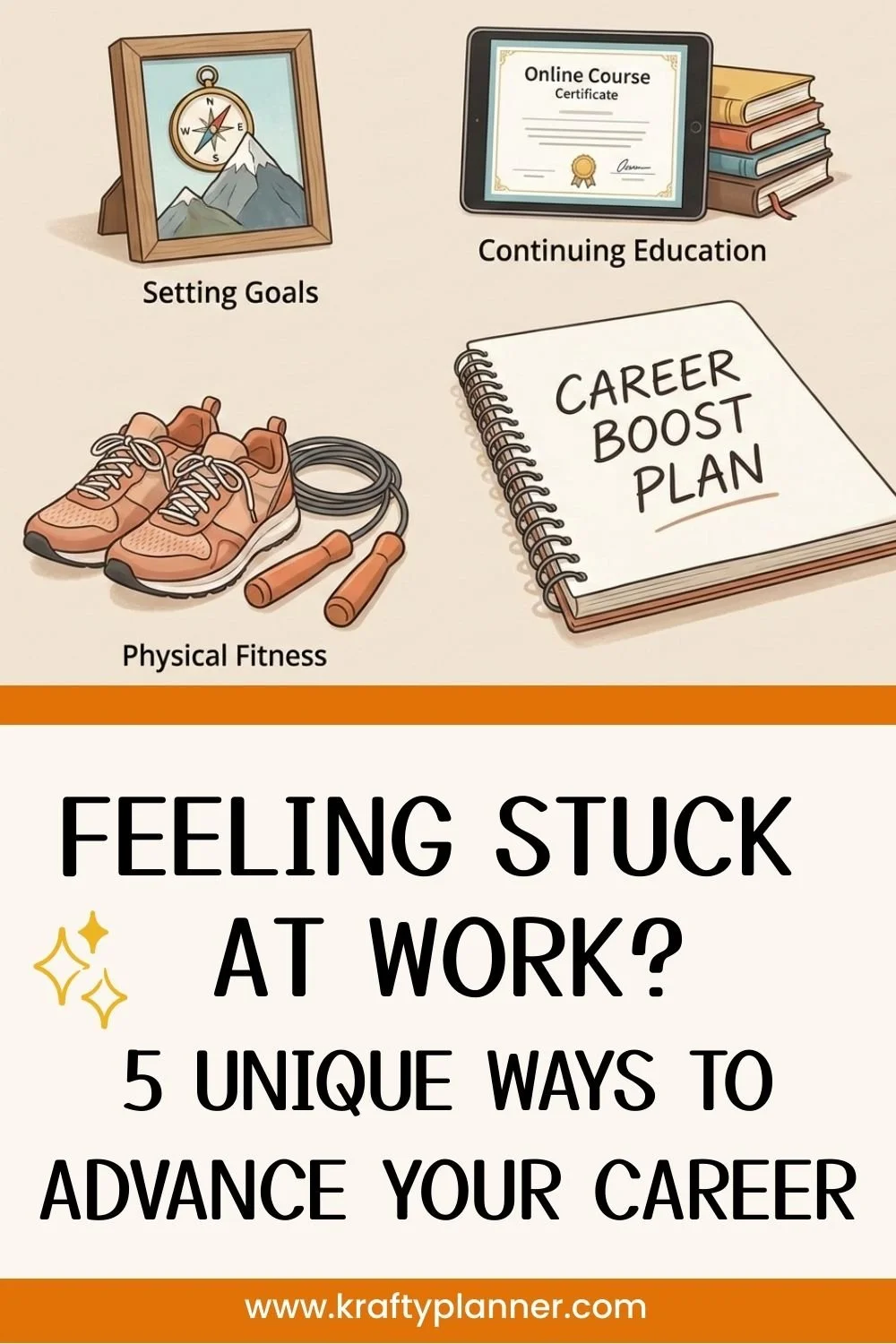
Setting Goals
Having a clear end goal is one of the most effective ways to advance your career. By knowing what you want, you can see how every step moves you toward your ideal life. This also helps you avoid being distracted by short-term setbacks.
Instead of thinking, "How can this help me right now?" you'll start to ask, "How does this get me closer to my goals?” That way, you stay focused on what truly matters to you and can disregard opportunities that don't align with your needs.
When setting goals, avoid common mistakes, such as failing to celebrate small wins or to plan ahead.
Continuing Education
Certain careers require continuing education, including trades, healthcare, and education. If your job needs a license, it's likely that you will need at least some sort of continuing education.
These requirements vary by state and by profession. However, many professionals put this off until the last minute or do only what is required by state law.
For example, plumbers need 14 hours of Florida plumbing continuing education courses, but other states, like Pennsylvania and Kansas, don't have any individual plumbing licenses and therefore don't require any continuing education. Plumbers in these states may not keep their skills up to date, missing opportunities to improve and command higher salaries.
Continuing education is invaluable in any career, as it enables you to deliver better service and demonstrate a higher standard of professionalism.
Consider enrolling in a course at your local community college; many offer online options so you don't need to attend in person. You'll find yourself a more knowledgeable colleague and a better leader who can confidently negotiate for a better position.
Work-Life Balance
Work-life balance isn't just better for your well-being, but also for your career. An article published by HR Future Magazine found that employees with a good work-life balance took less time off work, were happier with their jobs, and were more productive.
Improving your work-life balance means saying no sometimes. For example, if a colleague emails you at 10 pm, don't rush to reply; wait until standard working hours and remind them that you have only obligations. Don't feel guilty about turning down extra assignments if you can't make it work without becoming resentful.
A healthy workplace recognizes that employees deserve time to relax and care for their loved ones. If you're constantly getting pushback for saying no to unreasonable requests, it's time to walk away and find a new place that respects you more.

Physical Fitness
Physical fitness isn't just for your health; it also improves your productivity. A fit and active worker has more cognitive power, more energy, and a better attitude, which makes them stand out in a crowded job market.
Working out can provide a much-needed self-esteem boost, helping you embody strong leadership qualities and show off your confidence.
Some people balk at the idea of plodding along on a treadmill or lifting endless weights. That's okay; there are plenty of other ways to get active.
Consider trying an intramural sports league, signing up for a fun fitness class, or even dusting off those old skates. Trying new things also improves confidence and gives you something to look forward to after work.
Networking Through Hobby Groups
If you've started to optimize your work-life balance, you may have decided to take up a new sport or meet people with the same interests as you. This is great for your mental health, but did you know it can help your career, too?
Hobby group networking takes advantage of what psychologists call the halo effect, which means that if someone likes you in a certain setting, they're more likely to attribute positive characteristics to you in other facets of life.
For example, if you're known as a friendly face in your local board game group, your fellow enthusiasts will likely see you as a fun colleague. Those who step up to support their hobby groups naturally demonstrate leadership, making their peers more willing to endorse them for other roles.
These friends could alert you to potential job openings in your field, recommend you to others they know in your line of work, or introduce you to people who might be able to offer career advice.
Plus, if you're ever considering making a career change, your friends will be the first to cheer you on with suggestions and referrals.
Improving your career doesn't just happen in the office; it can occur anywhere that you find opportunities. Having a positive mindset, prioritizing growth, and building relationships may not be included in your standard professional recommendations, but they can be a powerful way to go further than your peers.
Before you go:
You might also be interested in…
FOR PERSONAL USE ONLY – Please Read Freebies Terms of Use
(This post may contain affiliate links. For more information, see my disclosures here.)
~ SHARE THIS POST ~
Did you like this post? Do you know someone else who might enjoy it? Please take a minute to share it on Pinterest, Facebook, or your favorite social media… Thank you!















Planning your year as a caregiver? Learn how to organize caregiving expenses, appointments, routines, and respite while protecting your budget and energy.