
Creating the Ultimate “Sunday Reset” Routine for 2026
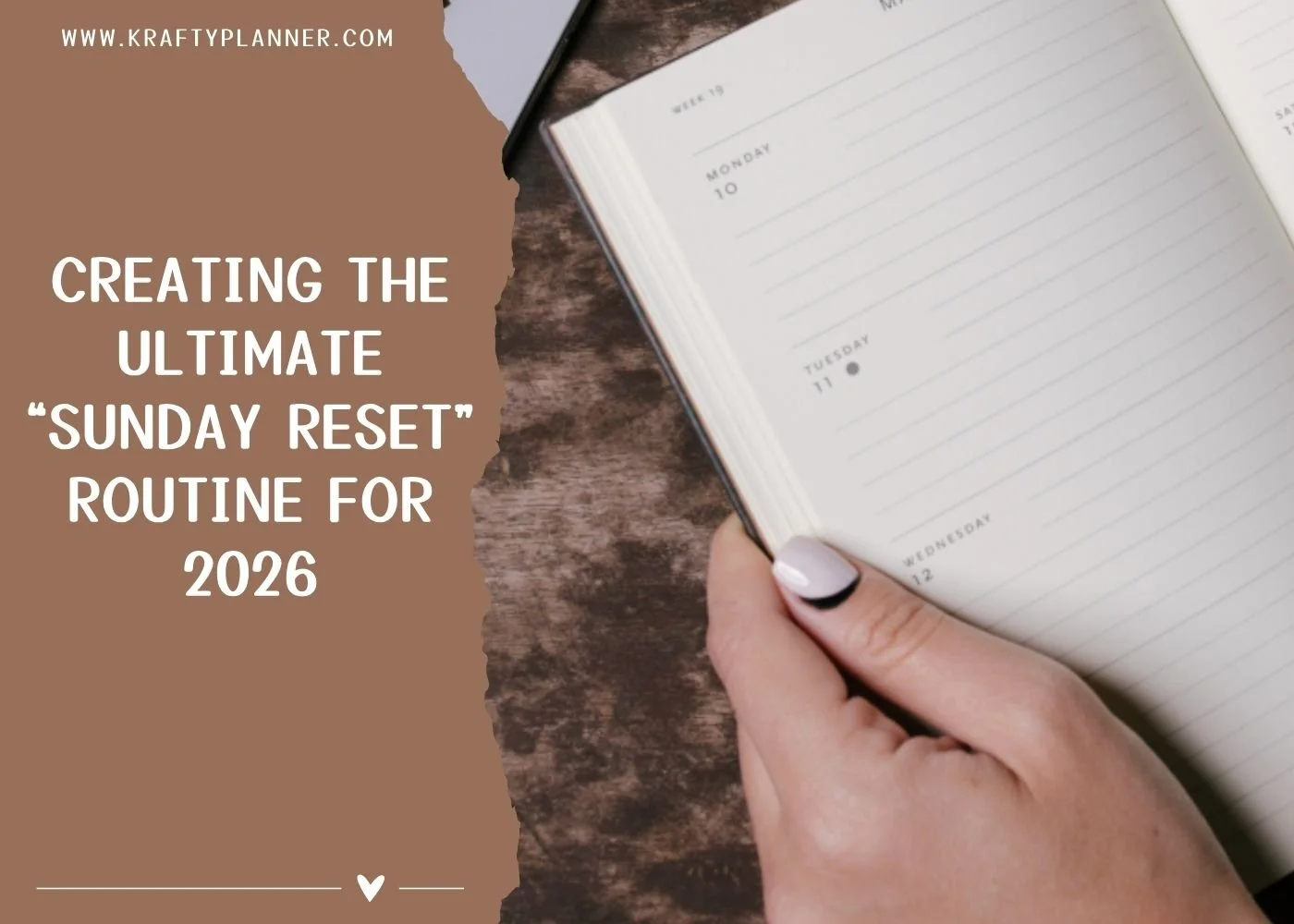
Sunday carries a familiar mix of comfort and quiet panic for many women. There’s relief in the slower pace, but also that low-level anxiety about everything waiting on Monday. The to-do list is already forming in your head. Once again, self-care has slipped to the bottom of the priority list.
In 2026, the idea of a Sunday Reset has become about aligning your planning system and your personal care so that your life feels intentional.
A Sunday Reset helps you step into the week feeling grounded when done well.
Why the Sunday Reset Matters More Than Ever
Modern life comes with constant decision fatigue. Your brain rarely gets a break between work, family, and personal goals. Even rest can feel stressful when you’re worrying about forgetting something important.
A structured Sunday Reset creates a container for all that mental noise. It gives you a designated time to review so your thoughts don’t follow you into every quiet moment of the week.
The difference in 2026 is that the most effective resets recognise that productivity and wellbeing are not separate systems. Your planner and your self-care routine should support each other, not compete for your time.
Clear the Mental Clutter Before You Plan
Start with a brain dump before you open your planner. This step is non-negotiable. Grab a notebook and write down everything that’s floating in your head. Tasks, worries, reminders, ideas, half-finished thoughts.
Don’t organise yet.
Just unload.
This single act often brings immediate relief. When your thoughts are on paper, your nervous system can relax. You’re no longer relying on memory to hold everything together.
Once your mind feels clearer, then you’re ready to plan with clarity.
Review the Past Week Without Judgement
One reason people abandon planners is guilt. Missed tasks all start to feel like evidence that the system “isn’t working.” A successful Sunday Reset reframes the weekly review as neutral information, not a performance review.
Ask yourself:
What worked well this week?
What felt heavy or draining?
What did I consistently avoid and why?
Where did I feel most like myself?
This reflection builds self-awareness. No pressure. Over time, it helps you design a life that fits your actual energy levels, not an idealised version of yourself.
Plan the Week With Energy in Mind
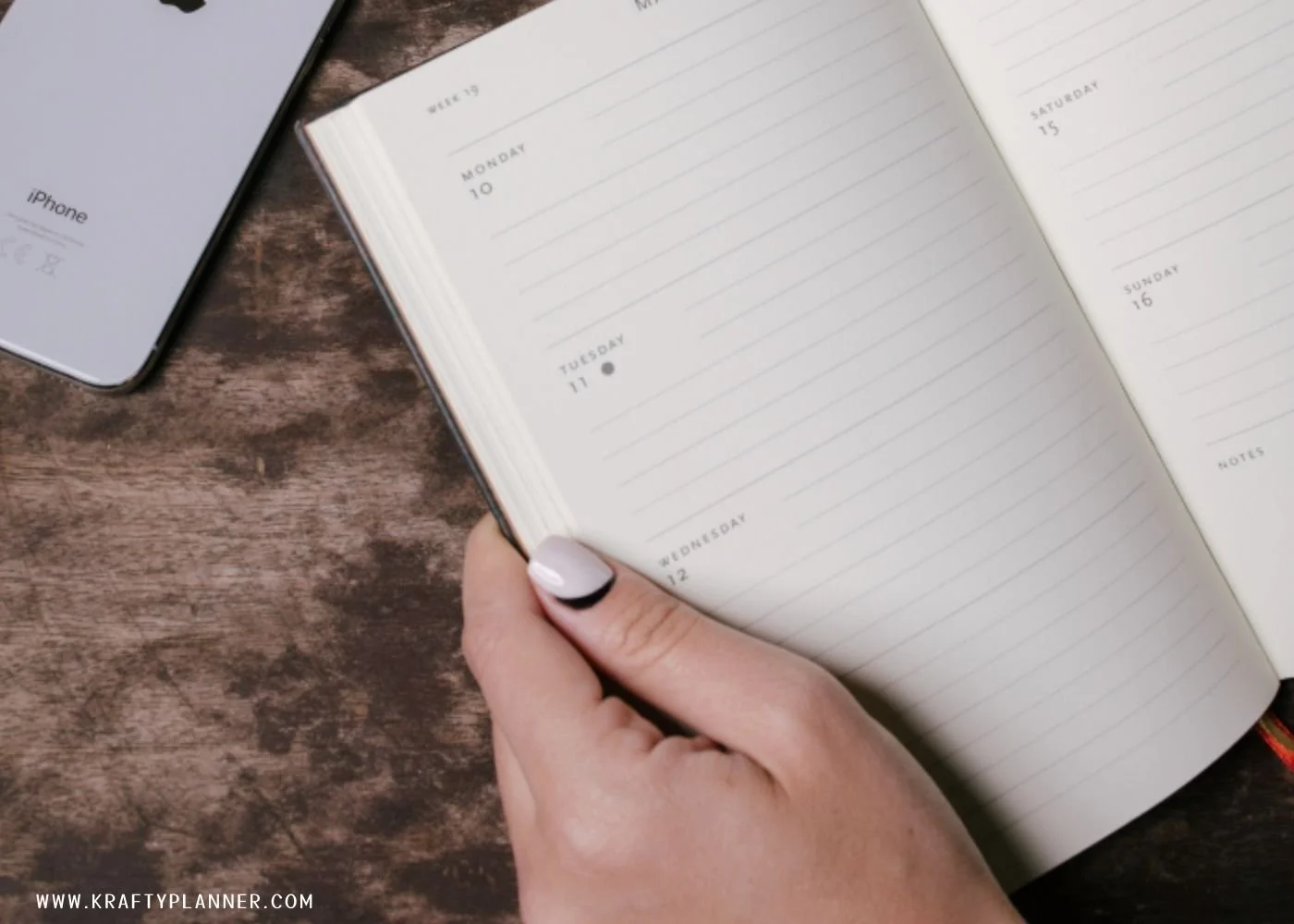
Now it’s time to open your planner, but instead of starting with tasks, start with capacity. Before you write a single to-do, scan the week ahead as a whole. Notice which days are already full with commitments that can’t be moved.
These are not blank slates, and treating them as such is often what leads to overwhelm later in the week.
Next, look for where you can realistically slow down. This might be a quieter evening. Identifying these moments ahead of time helps you protect them.
Finally, ask yourself what you want the week to feel like. How do you want to move through your days? Do you want it to feel calm or supportive?
Let that feeling guide how you plan. A week designed around energy often looks very different from one designed purely around output. Prioritise a few high-impact tasks rather than filling every space.
Don’t forget to leave breathing room. White space in a planner is protective. This approach reduces overwhelm and makes it far more likely you’ll actually follow through.
Schedule Self-Care Like an Appointment
One of the most common reasons self-care disappears during the week is simple: it never makes it onto the schedule.
It’s easy to treat something as optional when it isn’t written down, especially when responsibilities start piling up. A successful Sunday Reset changes that by giving self-care the same level of respect as any other commitment.
Start by identifying small moments of care that actually fit into your life. This might look like a quiet morning routine where you ease into the day without checking your phone, or an evening wind-down that helps your nervous system shift out of productivity mode. It could also be something as simple as carving out time midweek for a walk.
Grooming rituals often work especially well here because they’re grounding. Maintaining your nails, skincare, or hair has nothing to do with vanity. It's actually a moment where you can reconnect with your body after spending so much time in your head.
Many women are rediscovering at-home beauty rituals using professional-grade tools from places like F.O.X Nails USA as intentional care woven into their reset. These routines stop feeling indulgent and start feeling like maintenance when they are planned intentionally.
The key is to write these moments directly into your planner. Treat them as appointments with yourself. Self-care is far more likely to happen when it has a designated time and place.
Over time, this practice shifts how you view rest. Self-care becomes a foundational part of how you manage your energy. Everything else in your planner becomes easier to handle when your energy is supported.
Create an Aesthetic That Motivates You
A planner you love using. A pen that feels good in your hand. A calm, clean space for your Sunday Reset. These details are functional. You’re more likely to return to them when your tools are visually pleasing.
In 2026, “aesthetic productivity” is about creating an environment that supports focus and peace. Your planner should feel aligned with the life you’re building. Your habits tend to follow when your space feels intentional.
Close the Reset With a Ritual
End your Sunday Reset with something that signals completion. This helps your brain transition from planning mode into rest.
It might be:
Lighting a candle
Writing one intention for the week
Tidying your workspace
Doing your nails or skincare while listening to music
Simply closing your planner and putting it away
This closing ritual matters. It tells your nervous system that you’ve done what you need to do. The week ahead no longer needs to live in your head.
Conclusion:
The most powerful Sunday Reset routines are about creating a rhythm that actually supports your life. Planning and self-care work together, making the week ahead feel far more manageable.
Giving your thoughts a place to land, reviewing your week with compassion, and planning around your real energy reduces decision fatigue before it has a chance to take hold. You send yourself a clear message: your well-being matters just as much as your to-do list when you then layer in intentional self-care.
As we move through 2026, the Sunday Reset continues to evolve into becoming a boundary between rest and responsibility. A moment to realign with what you value, and a weekly reminder that balance is built through small, consistent choices.
You stop living in constant catch-up mode when your planner reflects your real priorities and your self-care is treated as essential. You begin the week feeling supported.
That sense of steadiness is what turns a simple routine into a sustainable way of living.
Before you go:
You might also be interested in…
FOR PERSONAL USE ONLY – Please Read Freebies Terms of Use
(This post may contain affiliate links. For more information, see my disclosures here.)
~ SHARE THIS POST ~
Did you like this post? Do you know someone else who might enjoy it? Please take a minute to share it on Pinterest, Facebook, or your favorite social media… Thank you!












Create a custom cabinet look in a small living room with modular storage that adds a built-in feel without renovation, DIY work, or hiring a contractor.