Factors That Affect the Cost of Custom Inflatable Arches

You've seen them at finish lines, grand openings, and trade show entrances. Custom inflatable arches create an immediate visual impact, but the price tag can surprise you if you don't know what drives it.
Whether you need one for a weekend 5K or a corporate event, the cost is never arbitrary. Several factors stack on top of each other to produce the final number on your quote. Understanding those factors gives you the power to budget smarter and get more value for every dollar you spend.
Size and Shape: How Dimensions Drive the Base Price
Size is the single most direct cost driver for any custom inflatable arch. The larger the arch, the more raw material goes into it, the longer it takes to manufacture, and the heavier it becomes for shipping.
A standard pedestrian arch that spans 15 to 20 feet across costs noticeably less than a wide-span event arch that stretches 40 feet or more.
Shape adds another layer to the calculation. A basic half-circle or tunnel arch is the most cost-effective format because the pattern is straightforward and production moves quickly.
More complex shapes, such as a square frame arch, a triple-lane racing arch, or a custom silhouette that follows your brand's logo outline, require additional pattern work and labor hours, which raises the price accordingly.
For eye-catching inflatable arches that stand out at major events, brands frequently choose wider, taller, or uniquely shaped structures. That choice is worth the investment for high-visibility occasions, but it does mean a higher base price before any other features get added.
Always confirm exact dimensions with your supplier before requesting a quote, because even a few extra feet in width can shift your total into a different pricing tier.
Material Quality and Construction Method: What You're Really Paying For
Two arches can look nearly identical in a product photo but perform very differently in the field. The difference almost always comes down to materials and how the arch was put together. Higher-grade materials cost more upfront, but they also hold air better, resist UV damage, and last through far more setups and takedowns.
Fabric vs. Vinyl and Sewn vs. Sealed Construction
Fabric-based arches, typically made from nylon or polyester, are lighter, more packable, and generally better suited for repeated use over several years.
Vinyl arches, on the other hand, carry a lower initial price point and work well for one-time or occasional events where budget is the primary concern.
The construction method matters just as much as the material itself. Sewn seams, where the fabric panels are stitched together with reinforced thread, produce a stronger bond that holds up under pressure and outdoor conditions. Heat-sealed or welded seams cost less to produce but can be more vulnerable to separation over time, especially in extreme heat or cold.
For long-term use, the extra cost of quality fabric and sewn construction pays for itself after just a few events. For a single promotional activation, vinyl with sealed seams may serve your needs perfectly well. Know how many times you plan to deploy the arch before you decide which construction tier fits your situation.
Branding, Design Complexity, and Custom Printing
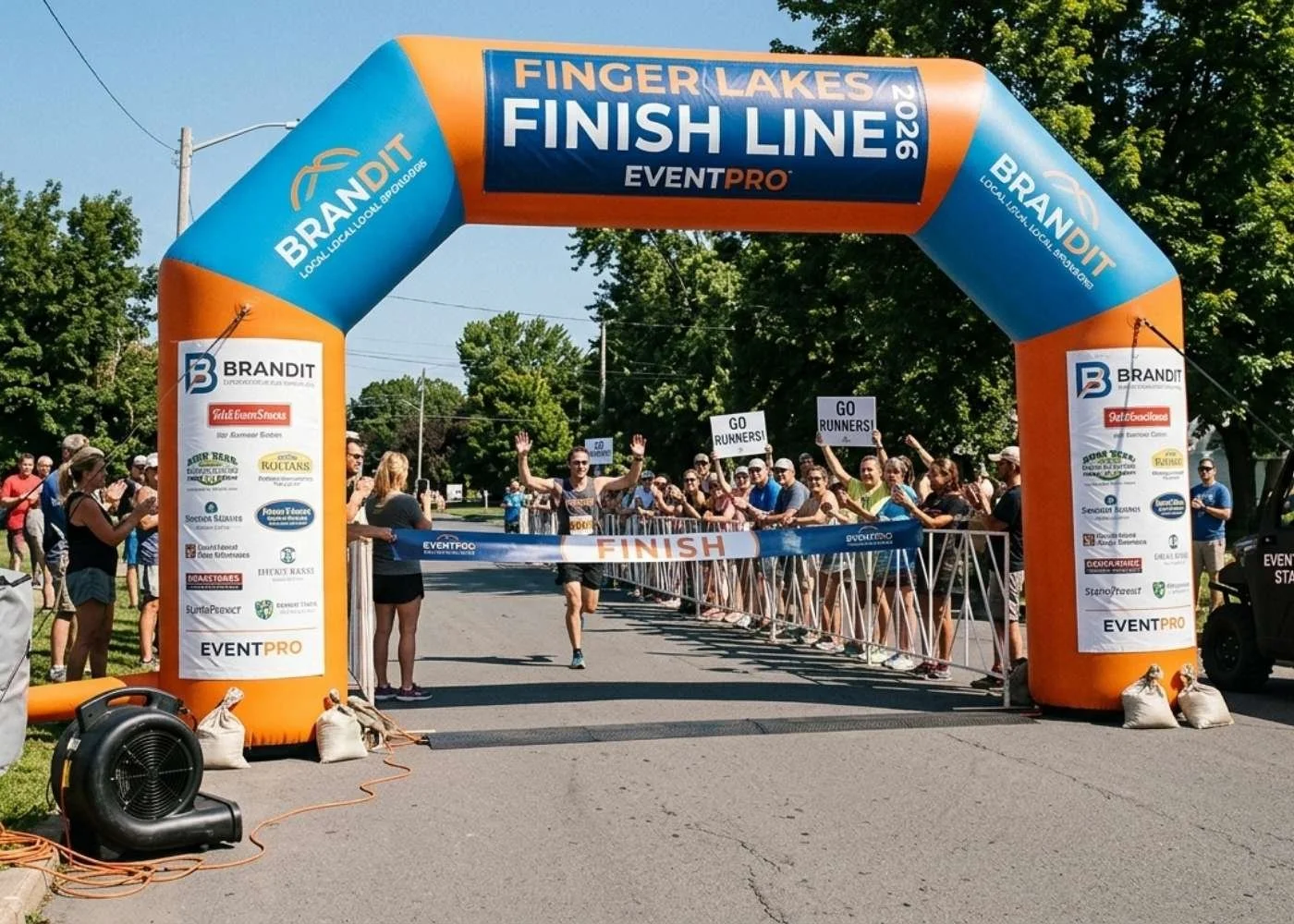
This is where a plain arch becomes your arch. Custom printing transforms a generic inflatable structure into a branded marketing asset, and the complexity of that printing directly affects the final cost.
Full-color digital printing across the entire surface of the arch costs more than a simple logo printed on one or two panels. The number of colors, the resolution of the artwork, and the total print area all factor into what you pay.
Photorealistic imagery and gradient designs require more processing time and higher-quality inks than flat, single-color graphics.
Design setup fees are also worth factoring into your budget. If your artwork needs to be reformatted, color-corrected, or rebuilt to meet print specifications, those hours translate directly into cost. Supplying production-ready files in the correct format saves you money and avoids delays.
Double-sided printing adds to the price because both surfaces of the arch need to be printed separately and then assembled. But, for arches placed in high-traffic areas where people approach from both directions, double-sided coverage delivers a much stronger brand impression. Think of it as a separate cost line that delivers real return for the right use case.
Inflation System, Accessories, and Add-Ons
The arch itself is only part of what you pay for. The inflation system and supporting accessories contribute meaningfully to the total cost, and these are areas where buyers sometimes get caught off guard.
Inflatable arches use one of two main inflation approaches: Continuous air blowers or sealed air chambers.
Continuous blower systems require a power source and keep air constantly flowing to maintain the shape. They cost less upfront but create ongoing operational considerations like noise and electricity access.
Sealed air chambers hold their shape without a constant power connection, which makes them more convenient for remote locations, but the production cost is higher.
Beyond the inflation system, accessories like ground stakes, sandbag anchors, tether ropes, carry bags, and repair kits add to your quote. Some suppliers include these items as part of a package, while others list them separately.
Always ask for a complete itemized breakdown, so you know exactly what you receive.
Lighting options, banner attachments, and additional signage panels are popular add-ons that raise the price but also increase the arch's visual presence. If any of these features matter for your event, factor them in from the start rather than treating them as optional afterthoughts.
Shipping, Lead Time, and Hidden Long-Term Costs
The price on your quote does not always reflect the full cost of ownership. Shipping, lead time, and ongoing maintenance are areas where extra expenses can quietly accumulate.
Large inflatable arches are bulky items, and freight costs for oversized packages can be substantial, especially for international shipping.
If your event has a hard deadline, expedited production or express shipping will add a premium on top of the base price. Standard lead times typically run two to four weeks, so plan ahead to avoid rush fees.
Storage between events is another cost that often goes unconsidered. A large arch requires clean, dry, and reasonably climate-controlled storage space. Improper storage accelerates material degradation and can lead to replacement costs sooner than expected.
For event organizers who regularly transport and store large promotional equipment, secure storage containers can provide a practical long-term solution. These containers help protect inflatable arches and other event assets from weather exposure, theft, and unnecessary wear between deployments.
Repair and maintenance are real factors for arches used across multiple seasons. Seam repairs, patch kits, and blower replacements are generally affordable on their own, but they do add up over time. An arch with higher upfront quality typically needs fewer repairs across its lifespan, which is why the total cost of ownership is a smarter metric than purchase price alone.
Always request a warranty and understand what it covers before you finalize any purchase.
Conclusion
The cost of a custom inflatable arch reflects a combination of size, materials, print complexity, accessories, and logistics. None of these factors exists in isolation. Hence, the smartest approach is to evaluate them together rather than focus on the lowest sticker price.
Define your use case first, then work through each cost driver with a clear head. That process leads to a purchase you won't regret the second time you set the arch up.
Before you go:
You might also be interested in…
How Wholesale Cabinets Help Contractors Cut Costs Without Cutting Corners
FOR PERSONAL USE ONLY – Please Read Freebies Terms of Use
(This post may contain affiliate links. For more information, see my disclosures here.)
~ SHARE THIS POST ~

Did you like this post? Do you know someone else who might enjoy it? Please take a minute to share it on Pinterest, Facebook, or your favorite social media… Thank you!













Make your printable planner pages look better at home with simple tips for choosing paper, adjusting printer settings, improving color, and binding pages.